
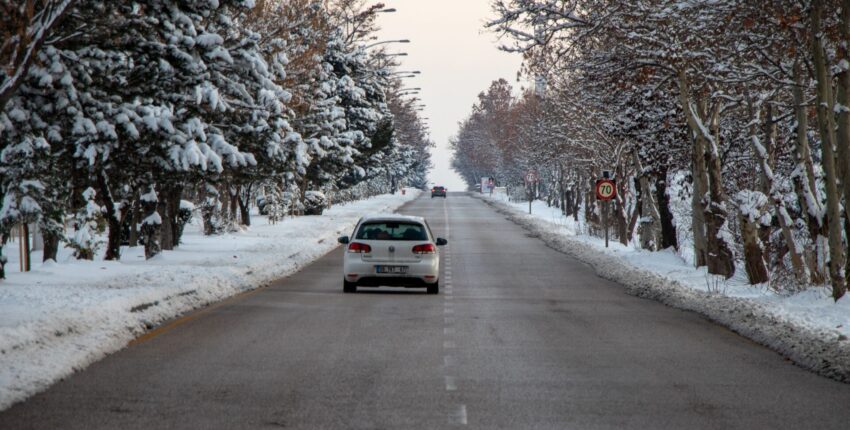
October is the perfect time to prepare your vehicle for winter in Petersburg, IL. The first freeze can arrive before you expect it, and cold temperatures quickly expose weak batteries, low tire pressure, poor visibility, and overdue brake maintenance.
The good news is that many winter-readiness checks can be completed in your driveway in under an hour. This practical car maintenance in Petersburg, IL checklist covers what you can inspect yourself and where it makes sense to hand the vehicle off to a professional.
Park on level ground, gather a tire-pressure gauge, flashlight, gloves, washer fluid, and basic cleaning supplies. Make sure the engine is off and completely cool before checking coolant.
Your 60-minute winterization plan
- 10 minutes: Battery and electrical check
- 10 minutes: Coolant level and freeze protection
- 10 minutes: Tire pressure and visible tire condition
- 10 minutes: Wipers, washer fluid, and lights
- 10 minutes: Brake check and short road test
- 5–10 minutes: Emergency kit and final preparation
If a check raises a concern, do not guess. A professional mechanic in Petersburg, IL can inspect the problem before cold weather turns a small issue into a roadside breakdown.
1. Check the battery: voltage is only the beginning
Cold weather makes the engine harder to crank, which puts extra demand on the battery. A battery that starts normally on a mild October morning may struggle when temperatures drop below freezing.
Start with a visual inspection:
- Look for white, blue, or green corrosion around the terminals.
- Make sure the cable connections are tight.
- Check for a swollen battery case, cracked housing, or damaged cables.
- Pay attention to slow cranking, dim headlights, or electronics that seem weaker than usual.
You can perform a simple voltage check with a multimeter while the engine is off. A fully charged battery often reads close to 12.6 volts after sitting, but this test primarily tells you about the battery’s current state of charge. It does not show whether the battery can deliver enough power during a cold start.
That is where a load test matters. A load test measures how the battery performs under starting demand. It can reveal a battery that looks fine at rest but drops too far when the engine is cranking.

The three-year battery rule
Most batteries last roughly three to five years, depending on driving habits, climate, vehicle design, and maintenance. Once a battery reaches three years old, have it tested before winter rather than waiting for symptoms. If you needed a jump-start during the summer, move that test to the top of your list.
Kerrigan’s Automotive offers battery, starter, and alternator service, including battery testing and charging-system checks.
2. Verify the coolant before the first freeze
Coolant, also called antifreeze, protects the engine from both overheating and freezing. With the engine cold, check the level in the translucent overflow reservoir. It should sit near the “Full” or “Cold” mark.
The mixture matters just as much as the level. In most vehicles, a 50/50 mixture of antifreeze and distilled water provides reliable protection for typical winter conditions. Some products and vehicle manufacturers call for a different ratio, so check your owner’s manual or the coolant label before adding anything.
A weak mixture contains too much water. If that water freezes, it expands inside the engine’s passages. That expansion can crack the radiator, damage hoses, or, under severe conditions, split the engine block. A repair caused by neglected coolant protection can cost thousands, while checking the mixture is quick and inexpensive.
Never remove a radiator cap while the engine is hot. If the coolant is low, you see a leak, or you are unsure which coolant your vehicle uses, schedule a cooling-system inspection instead of mixing products at random.
3. Set tire pressure for colder temperatures
Tire pressure typically drops about 1 PSI for every 10°F decrease in temperature. In Petersburg, a sharp change from a mild fall afternoon to a freezing morning can leave your tires noticeably underinflated.
Underinflation can cause:
- Faster wear along the outer edges of the tread
- Reduced fuel economy
- Less responsive handling
- More heat buildup inside the tire
- Longer stopping distances on wet or icy roads
Check all four tires when they are cold, ideally after the vehicle has been parked for at least 30 minutes. Use the PSI listed on the driver’s door-jamb placard or in the owner’s manual, not the maximum pressure molded into the tire sidewall.
While checking pressure, look for cracks, bulges, exposed cords, embedded objects, and uneven tread wear. Uneven wear may point to worn suspension components, poor inflation, or alignment problems.
A quick pressure check is a good DIY task, but it does not replace a complete inspection. A tire shop in Petersburg, IL can examine tread condition, balance, rotation needs, and signs of damage. If the vehicle pulls to one side or the steering wheel is off-center, schedule a wheel alignment in Petersburg, IL before winter roads make handling more difficult.
4. Replace worn wipers and fill winter-grade washer fluid
Winter driving often means snow, road spray, salt, and dirty slush across the windshield. Worn wipers can turn a manageable drive into a visibility problem.
Replace the blades if they:
- Leave streaks or unwiped sections
- Skip across the glass
- Make chattering noises
- Have cracked, split, or hardened rubber
Winter-grade wiper blades can help resist snow and ice buildup. Before installing them, clean the windshield so dirt does not damage the new rubber.
Next, check the washer reservoir. Replace summer fluid with a winter-rated formula designed to remain liquid below freezing. Plain water, or a summer blend not rated for low temperatures, can freeze in the reservoir, hoses, or spray nozzles.
Test the spray pattern after filling the reservoir. If the pump runs but little fluid reaches the glass, the nozzles may be clogged or the system may have a leak.
Take an extra minute to confirm that your headlights, brake lights, turn signals, and hazard lights work. Shorter days and winter precipitation make it just as important to be seen as it is to see.
5. Inspect the brakes before leaves, ice, and slush arrive
Fall is one of the smartest times to inspect your brakes. Wet leaves, ice, snow, and reduced traction already make it harder to stop. Worn pads or damaged rotors can add even more stopping distance when you need to react quickly.
During a driveway check, pay attention to:
- Squealing, grinding, or scraping sounds
- A brake pedal that feels soft or spongy
- Pulsation or vibration during normal stops
- Pulling to one side while braking
- A brake warning light on the dashboard
- A grinding noise that continues even after releasing the pedal
In a safe area, perform a few gentle stops from low speed. The vehicle should stop smoothly and track straight. Do not crawl under a vehicle supported only by a jack, and do not attempt a brake repair unless you have the proper tools, knowledge, and safe support equipment.
A professional inspection can measure pad thickness, examine the rotors, check brake fluid, and identify caliper or hydraulic problems. Getting brake repair in Petersburg, IL before winter is usually far less expensive than waiting until worn pads damage the rotors or a small fluid leak becomes a safety issue. Kerrigan’s brake services include brake inspections, diagnostics, and repairs.
6. Pack a basic winter emergency kit
Even a well-maintained car can encounter a closed road, traffic backup, flat tire, or dead battery. Keep these essentials in the trunk:
- Jumper cables or a charged jump pack
- Ice scraper and snow brush
- Flashlight with spare batteries
- Warm gloves, hat, and blanket
- Phone charger or portable power bank
- First-aid kit and necessary medications
- Bottled water and non-perishable snacks
- Small shovel and traction material
- Reflective triangles or a roadside warning vest
- Basic tools, work gloves, and paper towels
- Extra winter washer fluid
Keep the fuel tank at least half full when severe weather is expected. It gives you more flexibility if traffic stops or you need to take a longer route around poor road conditions.
What should be handed off to a shop?
Your one-hour check can identify many problems, but some winter-readiness tasks require professional equipment. Schedule service if you need:
- A battery load test or alternator diagnosis
- Coolant freeze-protection testing or a cooling-system flush
- Brake pad, rotor, caliper, or brake-line inspection
- A complete tire inspection or wheel alignment
- Dashboard warning-light diagnostics
- An overdue oil change in Petersburg, IL
Preventive maintenance works like a small roof repair before a storm: a modest fix now can prevent much more expensive damage later. That is especially true for batteries, coolant, tires, and brakes.
Get winter-ready before the first freeze
A quick fall inspection can help your vehicle start reliably, stop safely, and handle changing road conditions around Petersburg, Athens, Pleasant Plains, Ashland, Tallula, Greenview, Havana, and Lincoln’s New Salem State Park.
If your checklist reveals a weak battery, questionable coolant protection, uneven tire wear, or brake symptoms, schedule service with Kerrigan’s Automotive. Our ASE-certified mechanics provide reliable auto repair in Petersburg, IL, same-day service for most repairs, and clear recommendations for all makes and models.
Book your appointment online or call (217) 632-7728 before the first freeze catches you unprepared.